


 English
 中文简体
中文简体 русский
Power unit of forward moving stacker
Cat:DC series hydraulic power unit
This hydraulic power unit is specially designed for the forward stacker. It is integrated by a high-pressure gear pump, a DC Carbon brush or brushless...
See DetailsContent
In manufacturing, HPU stands for Hydraulic Power Unit.
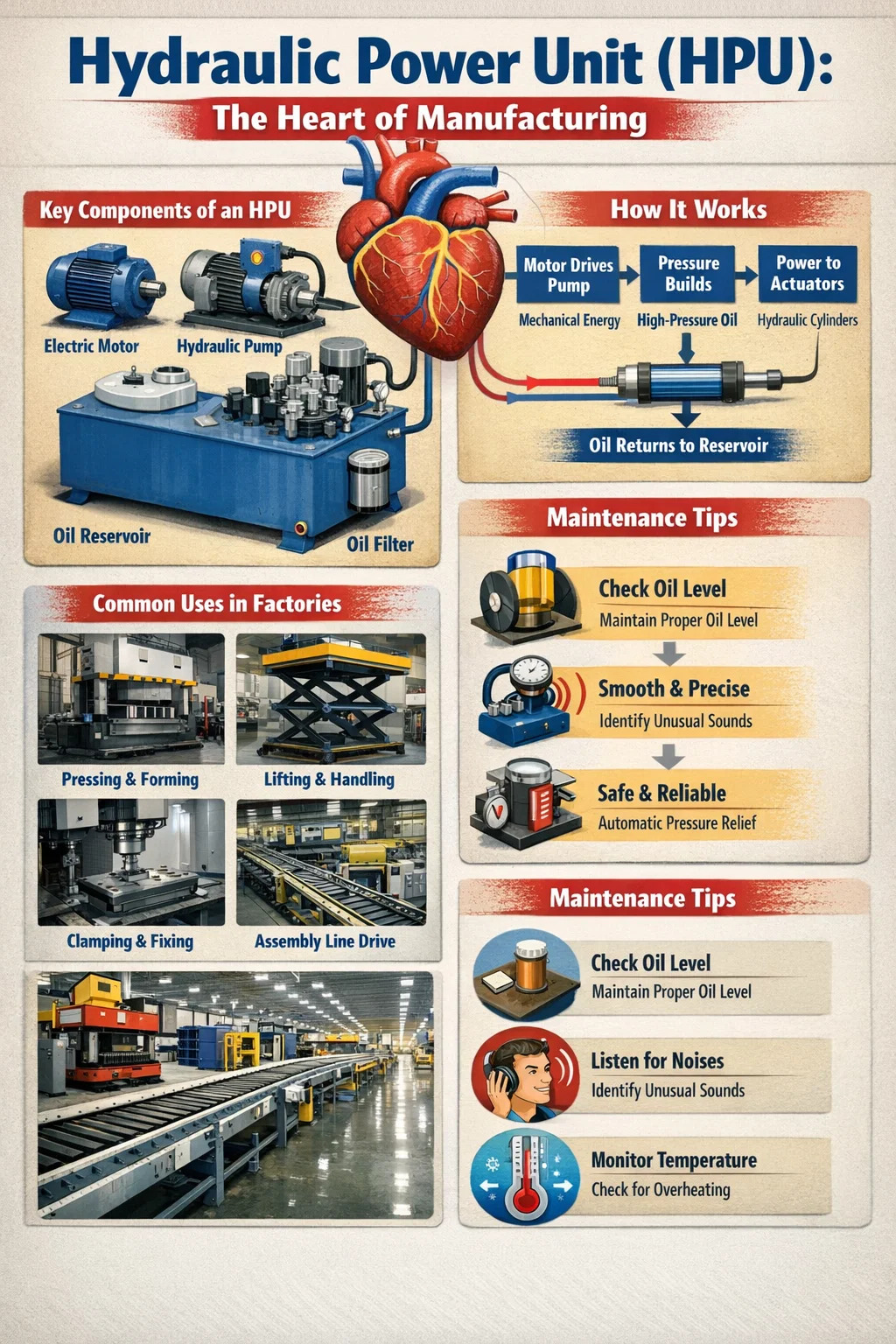
Simply put, if you compare the machinery in a factory to the human body, the hydraulic power unit is equivalent to the "heart." It generates power by compressing a fluid (usually hydraulic oil) and then delivers this power to the parts that need to do the work, such as robotic arms, presses, or lifting platforms.
A complete hydraulic power unit (HPU) is like a small power station, mainly consisting of the following parts:
Motor: This is the power source of the system, usually powered by electricity, driving the pump to rotate.
Hydraulic Pump: Located next to the motor, it is responsible for drawing fluid from the oil tank and pressurizing it.
Reservoir: Used to store hydraulic oil, it also serves to cool the oil and settle impurities.
Control Valves: Equivalent to "taps" or "switches," they determine where the oil flows and how much pressure is applied.
Filter: Ensures the cleanliness of the oil, preventing dirt from damaging precision parts.
Its working principle is actually quite simple:
Energy Conversion: The motor rotates, driving the hydraulic pump to convert mechanical energy into fluid pressure energy.
Power Transmission: High-pressure oil flows through pipes to the machine's actuators (such as hydraulic cylinders).
Action Completion: The high-pressure oil pushes the piston inside the cylinder, generating enormous thrust or pull, allowing heavy machinery to move.
Continuous Cycle: After completing its work, the oil flows back to the reservoir, is filtered, and prepared for the next cycle.
In manufacturing workshops, any task involving "heavy lifting" or "precise movement" basically relies on a hydraulic power unit.
Pressing and Forming: For example, stamping presses used to manufacture car parts require hundreds of tons of pressure to press steel plates into shape.
Lifting and Handling: Factory lifting platforms and automatic loading platforms are all powered by it.
Clamping and Fixing: When machining parts on CNC machine tools, it is used to firmly clamp the workpiece, ensuring that it does not move during processing. Assembly Line Drive: Drives heavy conveyor belts or large turntables smoothly.
Immense Power: Compared to purely electric motors, hydraulic systems can generate extremely large forces in a very small volume.
Smooth and Precise: The speed of the fluid flow can be finely adjusted, so the machine moves very smoothly without sudden changes in speed.
Safe and Reliable: As long as the safety valve is properly set, if the pressure exceeds the limit, the oil will automatically flow back into the oil tank, preventing damage to the machine.
To keep this "heart" beating for a long time, workers usually:
Check the oil level: Ensure there is enough oil in the tank to prevent the pump from "running dry."
Listen to the sound: A normal hydraulic power unit has a dull, even sound. If there is a harsh screeching sound, it indicates that air may have entered the system or the filter is clogged.
Check the temperature: If the casing is hot to the touch, it indicates a cooling problem and requires shutting down the machine for inspection.

This hydraulic power unit is specially designed for the forward stacker. It is integrated by a high-pressure gear pump, a DC Carbon brush or brushless...
See Details
This hydraulic pump station is composed of a series of side inlet and side outlet gear pumps and 4.5 or 5-inch DC motors. It is often used as a hydrau...
See Details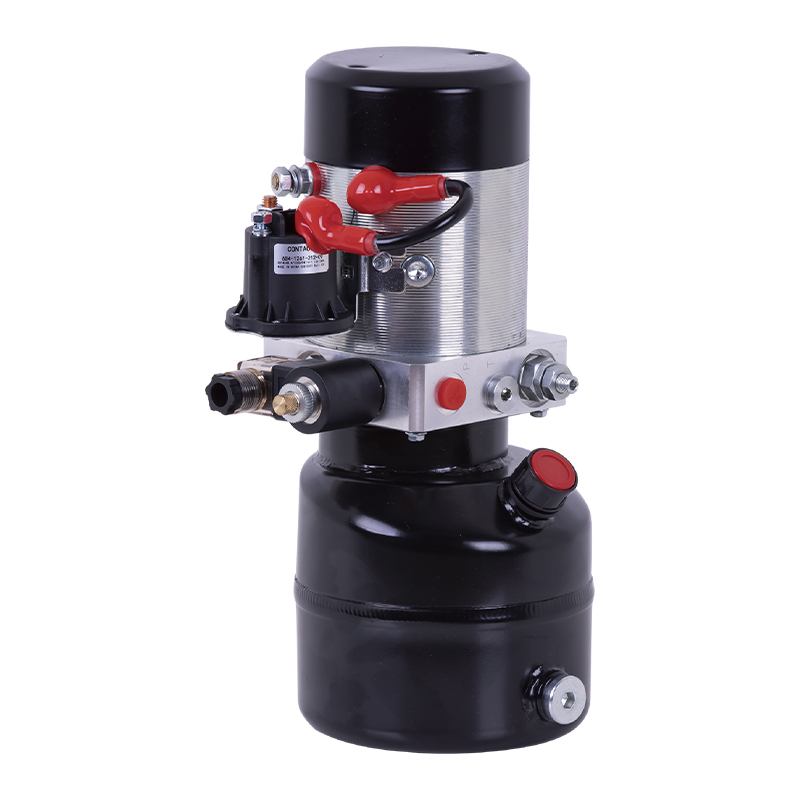
This hydraulic power unit is specially designed for a mobile hydraulic lifting table, which is integrated with a high-pressure gear pump. permanent ma...
See Details
This DC double acting power unit is an integrated hydraulic system designed for various equipment that requires efficient hydraulic drive. It is suita...
See Details
This DC micro power unit combines high-pressure gear pumps, DC motors, center valve blocks, cartridge valves and oil tanks. It is compact and powerful...
See Details
This boarding axle power unit is specially designed for fixed boarding ramps and integrates a high-pressure gear pump, an AC motor center valve block,...
See Details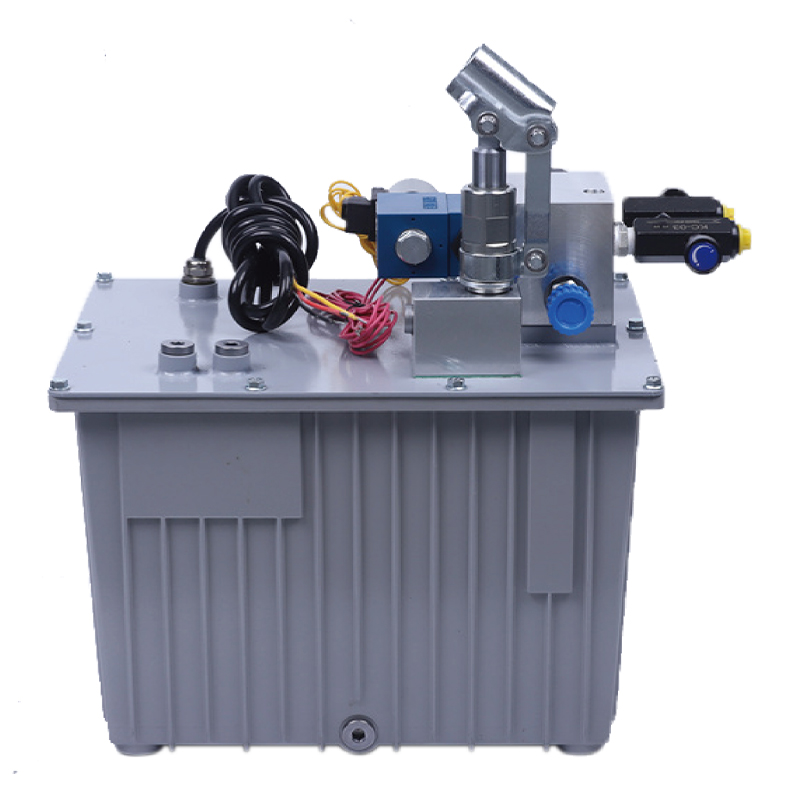
This hydraulic power unit is specially designed for an anti-terrorism hydraulic roadblock machine. It is integrated by a high-pressure gear pump, an A...
See Details
This hydraulic power unit is specially designed for hydraulic cargo elevators and is integrated with a high-pressure vane pump, AC Oil immersion motor...
See Details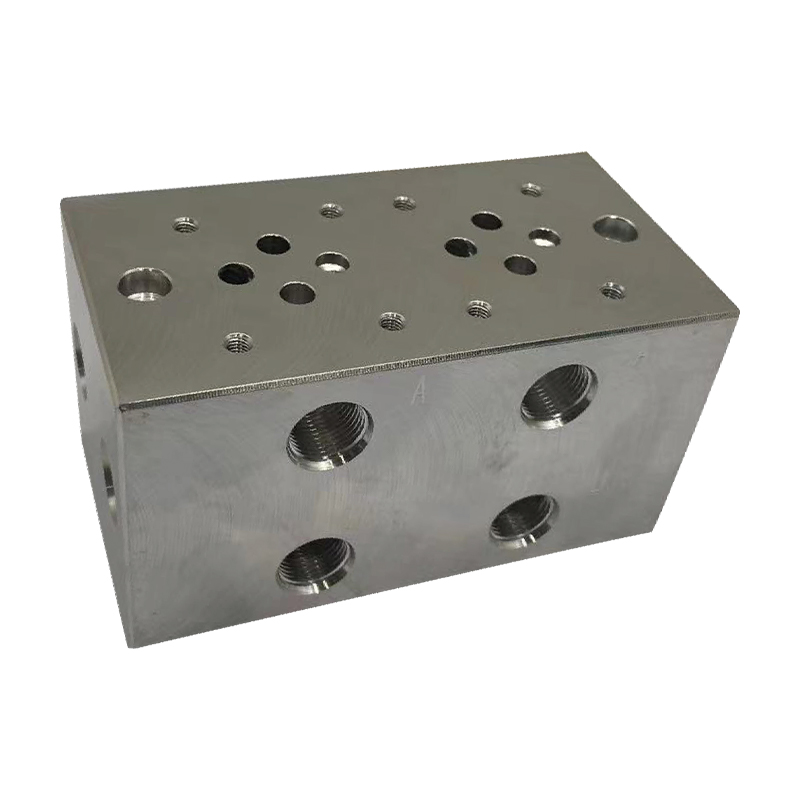
The multi-connection hydraulic integrated valve block is an efficient integrated component of the hydraulic system, including two-connection, three-co...
See Details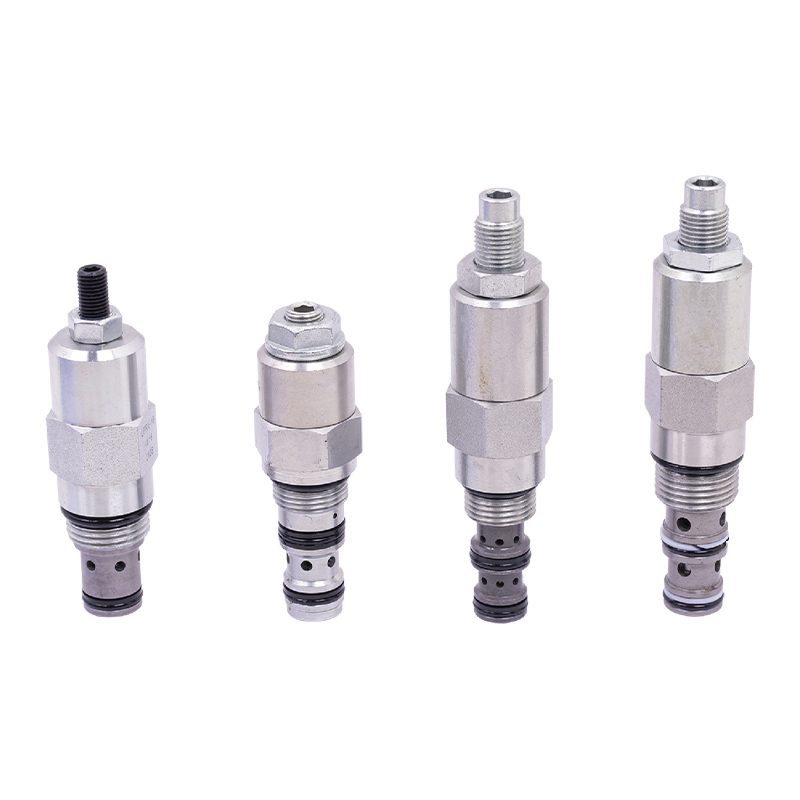
The regulating valve is a key device used in industrial control systems to adjust parameters such as fluid flow, pressure, and temperature. It can acc...
See Details
No. 12 Tongji Road, Simen Town, Yuyao City

+86-0574-62130352
+86-18905846028

+86-0574-62130353

Copyright© Ningbo Panic Hydraulic Technology Co., Ltd. All Rights Reserved. China Hydraulic Power Units Manufacturers

