


 English
 中文简体
 русский
Aerial vehicle electric pump
Cat:DC series hydraulic power unit
This hydraulic pump station is specially designed for a self-propelled aerial work vehicle. It is composed of 2 series side inlet and side outlet gear...
See DetailsContent
Most hydraulic power unit failures that look like pump problems start at the coupling. A 2.2 kW AC motor driving a 3 cc gear pump on a scissor lift table is a good example. After three or four years the unit gets louder, the operator notices a rattle at start-up, and a few months later oil starts appearing around the pump shaft seal. The elastomer insert in the jaw coupling between the two shafts had worn through, the hubs began touching, and every start-up was hammering the pump bearings through a metal-to-metal contact.
The short answer about hydraulic pump coupling types is easy to state. If the motor and pump shafts are machined into true alignment, a rigid coupling is the cheapest, stiffest and longest-lasting choice. If they are not, which is true in the great majority of AC and DC power units, a flexible coupling is the right answer, and the jaw type with an elastomer insert is the workhorse of the category. Metal-element designs such as bellows and disc packs take over once backlash, shaft speed or temperature become the controlling factor rather than price. The rest of this article explains how to tell which situation you are in, what numbers to check, and where the selection mistakes usually happen.
A coupling sits between two shafts that were not perfectly aligned when the unit was assembled and will not stay aligned after thousands of starts. Its job is to carry torque from one shaft to the other without adding load to either of them, and to swallow the small errors that remain after the bracket, the bell housing and the pump pilot have done their work.
The torque itself is modest. Using the standard relationship T = 9550 x P / n, a 2.2 kW motor at 1450 rpm delivers about 14.5 Nm, a 3 kW motor about 19.8 Nm and a 5.5 kW motor about 36.2 Nm. The pump side is in the same range: a gear pump displacing 2.5 cc per revolution and running at 200 bar needs roughly 8 Nm of theoretical shaft torque, or about 9 Nm once mechanical efficiency is taken into account. These are small numbers compared with the coupling ratings on the shelf.
What actually destroys couplings is not the steady figure. It is the combination of several loads arriving at the same time:
Anyone comparing coupling types should first understand the circuit the coupling is serving. The way a power unit generates and controls flow is covered in our overview of how a hydraulic power unit generates and controls flow, which is a useful background before narrowing down a part number.
A rigid coupling transmits torque through a solid connection. There is no compliant element, so every fraction of a millimetre of offset or angle becomes a bending load carried by the motor bearing and the pump bearing. As a rule of thumb, a rigid coupling needs radial offset below about 0.05 mm and angular error below roughly 0.05 degrees to give long service life. That sounds severe, and it is, but it is also achievable when the pump and motor are joined by a machined interface rather than by a bracket and a pair of slotted holes.
The advantages are real: no wear part, no backlash, high torsional stiffness that keeps position control repeatable in closed-loop equipment, and the lowest cost per unit of torque. The disadvantages are equally real: no damping, no forgiveness, and a habit of transferring every vibration straight into the pump bearings. On integrated lifting column units and vertical designs the shafts are frequently splined or keyed directly, and a solid 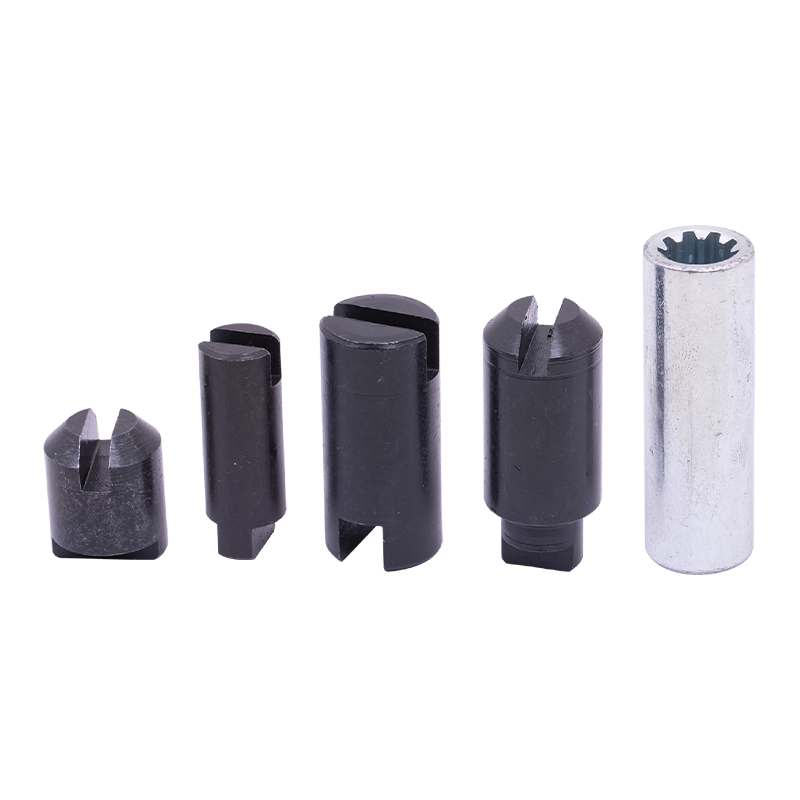 Rigid couplingThe rigid coupling is a key component in mechanical transmission that connects two shafts, rotates synchronously and transmits torque. It is composed of rigid parts, h...View Product → is the correct and economical answer.
Flexible couplings absorb misalignment through an elastomer, a metal element or a sliding joint. They are the reason a power unit assembled on a welded bracket with normal production tolerances can still run quietly for years. Four families cover almost every hydraulic application.
Two hubs with intermeshing teeth share a moulded insert. Catalogue values for common industrial sizes are typically 0.3 to 0.5 mm of radial misalignment, about 1 degree of angular misalignment and 0.5 to 1 mm of axial float, with torque from a couple of Nm up to several hundred. NBR inserts work from roughly minus 40 C to 100 C; urethane inserts carry more torque in the same envelope but lose capacity above about 80 C. This is the type that turns up on the majority of AC power units for lifting platforms, boarding bridges and machine tools, and on many DC units as well.
A rubber sleeve or tire is clamped over both hubs. The design is cheap, quiet and light, which is why it appears on mini power packs, small hand pallet trucks and light mobile lifting platforms. Misalignment capability is smaller than a jaw coupling and heat tolerance is limited, so it is a poor choice in a hot motor compartment.
These use a stainless steel bellows or a stack of thin discs instead of polymer. The result is zero backlash, high torsional stiffness, useful operation from minus 40 C to well above 200 C and no ageing elastomer to replace. They cost noticeably more and damp very little vibration, so they are chosen for servo-driven and closed-loop units, for high ambient temperatures and for applications where lost motion would show up in the machine cycle.
When the motor axis is not in line with the pump axis, a universal joint or splined telescopic shaft is the only practical option. This layout is common on mobile DC units for pallet trucks and tail lifts, where the motor sits transversely or vertically to save space under the vehicle. These joints need a grease point or a protective boot, and their wear shows up as a knock at each start rather than as a steady noise.
For standard motor-to-pump connections in lifting, loading dock, machine tool and warehouse equipment, a 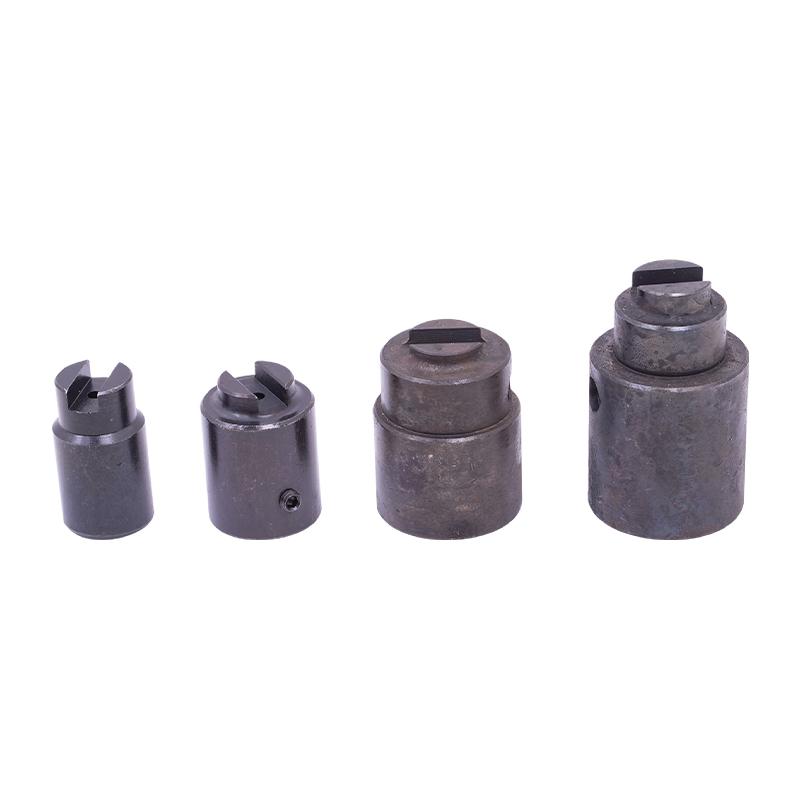 Flexible CouplingFlexible couplings are key components for connecting two shafts and transmitting torque. They can compensate for the relative displacement (radial, axial, and angular ...View Product → with a replaceable insert gives the best balance of tolerance, damping and serviceability.
The table below puts the six practical options next to each other. Use it to eliminate types quickly, then confirm the final size against a catalogue rating for continuous torque, peak torque and maximum speed.
| Coupling type | Misalignment tolerated | Backlash | Typical torque range | Damping | Typical power unit use |
|---|---|---|---|---|---|
| Rigid flange | Under 0.05 mm radial | None | 20 to 1000 Nm and above | None | Large AC units on machined brackets |
| Rigid sleeve or clamp | Under 0.05 mm radial | None | 5 to 200 Nm | None | Small oil-immersed and integrated units |
| Jaw with elastomer insert | 0.3 to 0.5 mm radial, about 1 degree | Small, grows as the insert wears | 2 to 400 Nm | Good | Most AC and DC power units |
| Rubber sleeve or tire | 0.2 to 0.5 mm radial, 1 to 2 degrees | Moderate | 1 to 100 Nm | Good | Mini power packs, light DC units |
| Bellows or disc pack | 0.1 to 0.3 mm radial, up to 1 degree | None | 5 to 500 Nm | Low to moderate | Servo and closed-loop units, hot areas |
| Universal joint or splined shaft | Large angular, offset layouts | Some, grows with wear | 10 to 1000 Nm | Low | Mobile DC units with offset shafts |
Sizing is not complicated, but it has to be done in the right order. Skipping step three is the most common cause of a coupling that fails in the first season of use.
A coupling is only as good as the alignment under it. On a small power unit, a straightedge laid across both hubs plus a feeler gauge is enough to find the large errors, and a dial indicator on the pump shaft will show the rest. Shim the pump or the bracket, never the coupling.
Coupling failures follow a small number of patterns, and each one points to a different root cause. Reading the failed part before ordering a replacement is the fastest way to avoid a repeat.
On the purchasing side, the recurring risks are a bore or keyway that does not match the drawing, an elastomer with no stated temperature range, and a coupling sold by shaft size alone with no torque rating attached. Ask for the continuous torque rating, the peak torque rating, the maximum speed and the insert material on the order confirmation. A part that costs a few euros but arrives with the wrong bore can stop a production line for a week.
A coupling never works alone. It fits between a motor, a mounting flange or bell housing, and a pump, all of which impose their own limits. Integrated units that use a B14 flange or a square flange motor put the pump pilot directly into the motor face, which brings the shafts close to coaxial and allows a compact coupling. Bracket-mounted units on lifting platforms and boarding bridges need the flexible type because the bracket is welded, not machined.
On the pump side, the coupling must handle the torque taken by the pumping element. A larger  Gear pumpsGear pumps are positive displacement pumps that rely on gear meshing to achieve liquid delivery. They can stably output high-pressure fluids, have a compact structure ...View Product → working at higher pressure will raise both continuous and peak shaft torque, which can push a coupling that was fine at 120 bar past its insert rating at 200 bar. The same logic applies to the valve group and the oil tank: a relief valve that opens sharply sends a torque spike straight down the shaft, and an undersized tank that runs hot will shorten insert life even when the alignment is perfect.
Mobile and battery-powered equipment adds another layer. DC units on pallet trucks, stackers, tail lifts and aerial vehicles often run at higher motor speeds, start under load and sit in cramped spaces where a slightly larger coupling does not fit. The layout rules for those machines are set out in our guide to DC hydraulic power units, and the same principles apply when a coupling is being changed on an existing unit.
The jaw coupling with an elastomer insert. It covers the widest torque range, tolerates normal bracket tolerances, damps motor vibration and can be repaired in minutes with a spare insert. Rigid flange and sleeve couplings take second place and appear mostly where the motor and pump are joined by a machined interface.
Often yes, and it is a sensible upgrade when the original rigid coupling keeps wearing shaft journals or when pump bearing noise develops early. Check the axial space first, because a flexible coupling is usually longer than the rigid sleeve it replaces, and confirm that the bore and keyway dimensions match both shafts.
For common industrial sizes, expect roughly 0.3 to 0.5 mm of radial offset, about 1 degree of angular error and 0.5 to 1 mm of axial movement. Running at the maximum reduces insert life, so a practical target is half of the published figure. Alignment beyond the limit shows up as heat, noise and a flattened insert within weeks.
Repeated annual failures usually mean one of four things: persistent misalignment, an undersized coupling working above its rating, a urethane insert running above its temperature ceiling, or an elastomer that is not compatible with the oil or the cleaning fluid used on the machine. Measuring the radial and angular alignment with a dial indicator takes an hour and usually identifies the cause.
The type is often the same, but the sizing changes. DC motors on battery-powered equipment run faster, start under load and generate a higher surge torque relative to their rated power, so the service factor matters more. Offset and vertical motor layouts on mobile machines also push some designs towards universal joints instead of inline couplings.
Listen at start-up. A soft clatter that lasts a fraction of a second is the first sign of insert wear, and it usually appears before any visible damage. Rotate the shafts by hand with the power off; if there is perceptible free movement before the pump turns, the insert has lost its preload and should be replaced.
Yes, considerably. An elastomer insert interrupts the path that motor vibration would otherwise take into the pump housing, and a worn insert removes that barrier. On units where noise is a specification, such as parking garage and cargo elevator power packs, a flexible coupling combined with an oil-immersed motor is a standard combination.
Ordering by shaft diameter alone. Two couplings that both fit a 19 mm shaft can differ by a factor of three in torque rating, insert material and maximum speed. Supply the motor power, motor speed, pump displacement, working pressure and the measured bore and keyway dimensions, and the correct part follows from those numbers.
Choose a rigid coupling when the motor and pump are joined by a machined interface and the shafts are genuinely coaxial. Choose a flexible coupling for everything else, and in most AC and DC power units that means a jaw coupling with a replaceable elastomer insert. Move to a bellows or disc design when backlash, speed or temperature rule out polymer. Whichever type you select, the torque rating, the misalignment capability, the bore and keyway dimensions and the axial gap decide whether the unit runs quietly for five years or starts knocking after one season.

This hydraulic pump station is specially designed for a self-propelled aerial work vehicle. It is composed of 2 series side inlet and side outlet gear...
See Details
Designed for hydraulic lifting platforms, this lifting platform power unit integrates a high-pressure gear pump, AC motor, center valve block, cartrid...
See Details
This hydraulic power unit is designed specifically for CNC machine tool cutting cylinders and can provide precise power and control, consisting of a h...
See Details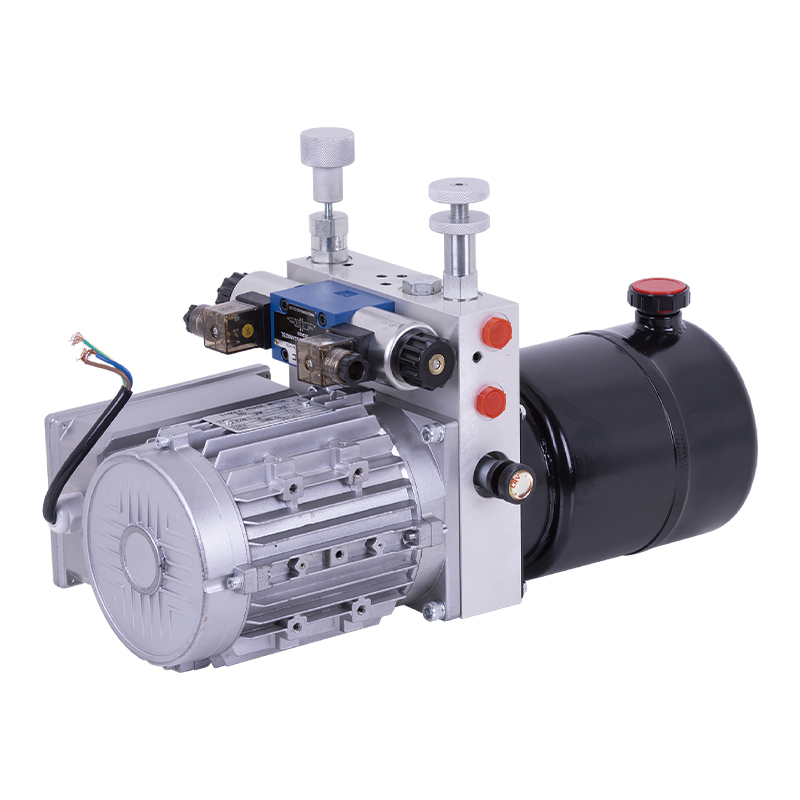
This hydraulic power unit is specially designed for hot-melt butt welding machine and is integrated by high-pressure gear pump, AC motor central valve...
See Details
This hydraulic power unit is designed to meet extreme security needs, especially for critical occasions where large vehicles such as heavy trucks and ...
See Details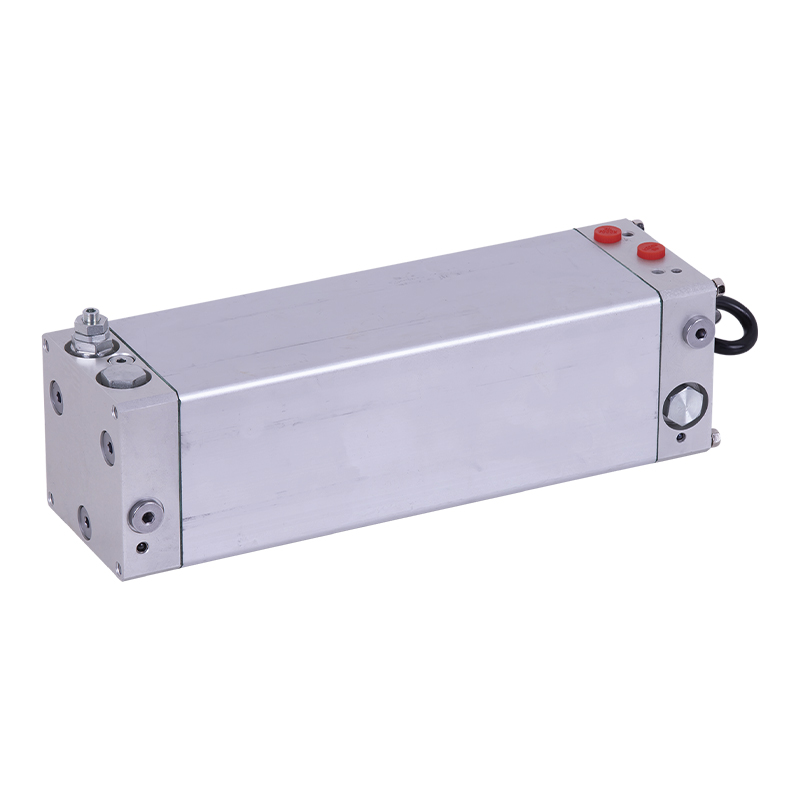
This oil immersed bidirectional pump power unit is designed for various types of mechanical equipment. It integrates a high-pressure bidirectional gea...
See Details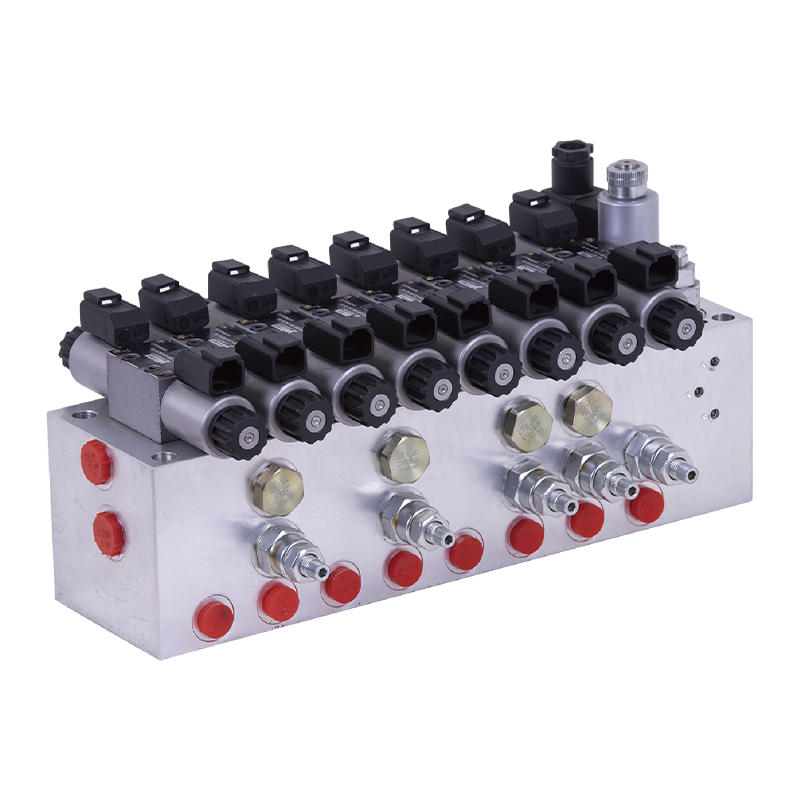
The modular hydraulic valve block uses modular integrated design to accurately combine multiple hydraulic valves, greatly simplifying the system pipel...
See Details
The relief valve is the core component for controlling pressure in the hydraulic system. It can maintain the stability of the system pressure and prev...
See Details
The hydraulic solenoid valve is a key component in the hydraulic system that controls the opening and closing or reversing of the hydraulic oil passag...
See Details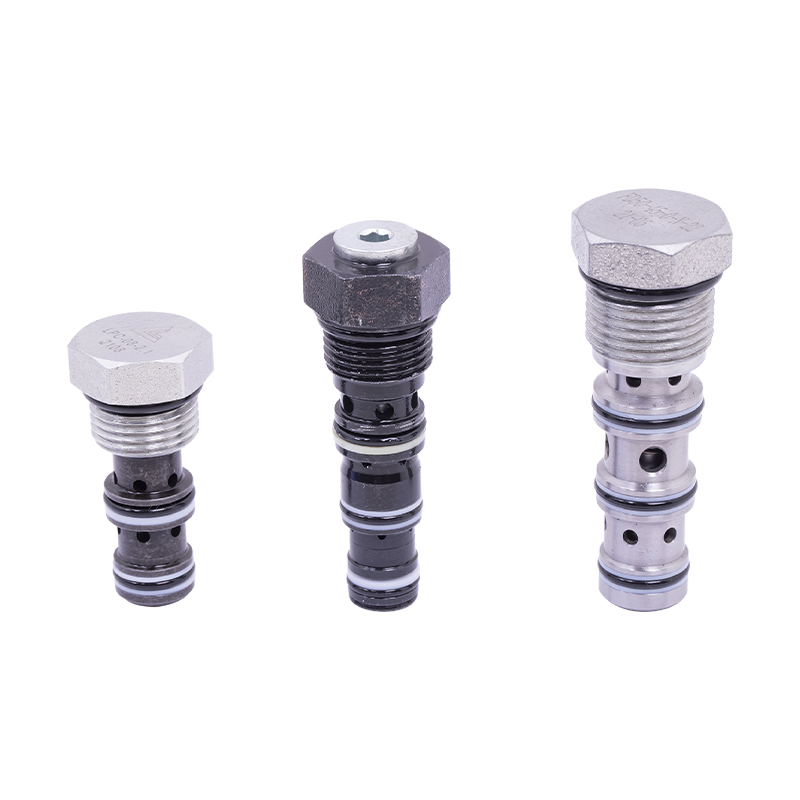
The cartridge hydraulic control check valve controls the on/off and flow direction of the hydraulic oil to start, stop, change direction and lock the ...
See Details
No. 12 Tongji Road, Simen Town, Yuyao City

+86-0574-62130352
+86-18905846028

+86-0574-62130353

Copyright© Ningbo Panic Hydraulic Technology Co., Ltd. All Rights Reserved. China Hydraulic Power Units Manufacturers

