


 English
 中文简体
中文简体 русский
Mini Pallet Truck Hydraulic Power Unit
Cat:DC series hydraulic power unit
This hydraulic power unit is specially designed for all electric pallet truck.It consists of high voltage gear pump,permanent magnet DC motor and cent...
See DetailsContent
A CDU unit (Compact Drive Unit) is a self-contained hydraulic power package that integrates a pump, motor, reservoir, valves, and control elements into a single enclosure. It delivers pressurized hydraulic fluid on demand to actuators, cylinders, or motors in industrial, mobile, and marine equipment. The defining characteristic is compactness: all hydraulic components are pre-assembled, pre-piped, and ready to install without on-site plumbing work beyond the connection ports.
CDU units are closely related to — and often used interchangeably with — the term DC hydraulic power unit, particularly when the drive motor runs on direct current (12 V, 24 V, or 48 V DC). This makes them the default choice for battery-powered platforms: utility vehicles, aerial work platforms, tail lifts, tipper trucks, agricultural machinery, and off-grid industrial stations where AC grid power is unavailable.
In plain terms: if you need hydraulic force without running a separate motor-pump combination and without routing external hydraulic lines across a machine frame, a CDU unit is the solution. A typical unit delivers between 0.5 L/min and 20 L/min at pressures ranging from 100 bar to 350 bar, depending on the application class.
Understanding what a CDU unit contains helps explain why it performs so reliably across such varied environments. Every unit — whether marketed as a compact drive unit or a DC hydraulic power unit — shares the same fundamental architecture.
DC versions use permanent-magnet or brushless motors rated at 12 V, 24 V, or 48 V. AC versions use single-phase or three-phase induction motors. Motor power ranges from 0.3 kW (small tail lift) to 7.5 kW (heavy industrial cylinder). Motor efficiency directly determines battery draw in mobile applications — brushless designs achieve up to 92% efficiency versus 78–82% for brush-type motors.
Gear pumps dominate CDU configurations due to their cost-efficiency and tolerance for variable-viscosity oil. Piston pumps appear in high-pressure units exceeding 250 bar. Displacement typically ranges from 0.4 cc/rev to 4.5 cc/rev. Some DC hydraulic power unit designs use bi-rotational gear pumps so a single motor reversal extends and retracts a cylinder without switching valves.
Steel or aluminum tanks sized from 0.5 liters to 20 liters hold the working fluid. Baffles prevent aeration; breather caps with desiccant filters keep moisture out. Smaller reservoirs work because CDU units cycle intermittently — they do not run continuously like central hydraulic stations.
Directional control valves, pressure-relief valves, check valves, and solenoid-operated cartridges are all ported into a machined aluminum or ductile iron manifold. This eliminates hose connections between components, reducing leak points to near zero inside the unit.
Advanced CDU units incorporate CAN-bus interfaces, proportional valve drivers, current-sensing overcurrent protection, and thermal shutoffs. Entry-level DC hydraulic power unit designs use simple relay-based controls. Both approaches can be wired into a vehicle's existing electrical system within a few hours.
Return-line filters rated at 10 microns (absolute) keep fluid clean enough for solenoid cartridge valves. Suction strainers add a coarse first stage. In mobile applications where vibration dislodges particulates from hoses and fittings, good filtration extends pump life from under 2,000 hours to beyond 8,000 operating hours.
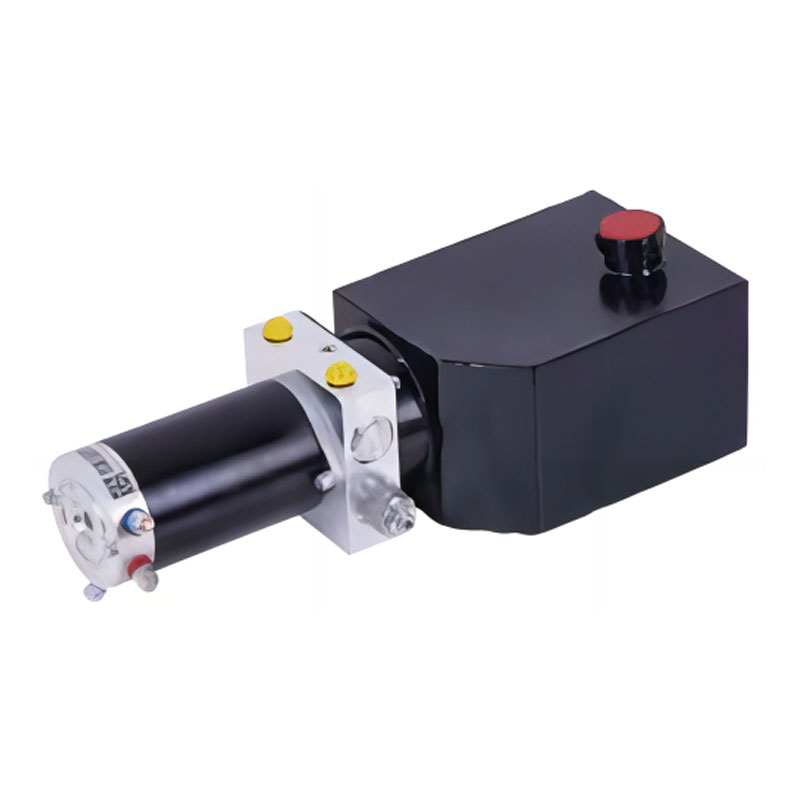
CDU units are not a single product — they span a wide classification matrix based on supply voltage, pump type, mounting orientation, and valve configuration. The table below summarizes the main categories buyers encounter.
| Classification Axis | Common Variants | Typical Pressure Range | Primary Application |
|---|---|---|---|
| Supply Voltage | 12 V DC / 24 V DC / 48 V DC / 110–240 V AC | Up to 250 bar | Mobile vehicles, off-grid stations |
| Pump Type | Gear / Piston / Vane | 50–350 bar | General / High-pressure / Medium-pressure |
| Valve Configuration | Single-acting / Double-acting / Proportional | Varies | Tippers / Clamps / Servo control |
| Motor Type | Brush DC / Brushless DC / AC Induction | N/A (motor classification) | Battery / Mains-powered systems |
| Mounting Orientation | Vertical / Horizontal / Submerged | Same as above | Space-constrained installations |
The DC hydraulic power unit segment within this matrix is the fastest-growing category, driven by electrification of commercial vehicles. Market data indicates that demand for 24 V and 48 V DC hydraulic power units grew at roughly 9.4% CAGR between 2018 and 2024, with the tail-lift and aerial work platform sectors accounting for over 40% of unit volume.
When engineers specify a DC hydraulic power unit, they are selecting a CDU unit optimized for direct current battery supply. Several design differences distinguish DC units from their AC counterparts:
The practical implication: a 24 V DC hydraulic power unit on a refuse collection truck lifts a bin in roughly 4 seconds, draws approximately 180–220 A peak, and then sits idle for 30–45 seconds while the truck moves to the next stop. This duty cycle is precisely what DC motor windings are designed for. Running such a unit continuously would cause thermal failure within minutes — sizing the motor for the actual duty cycle is the critical engineering step most buyers overlook.
CDU units appear across a surprisingly wide range of industries. The combination of self-contained design, compact footprint, and — for DC variants — battery compatibility makes them adaptable to almost any mobile or space-limited hydraulic application.
This is the largest single market for DC hydraulic power units globally. Delivery vehicles equipped with tail lifts use 12 V or 24 V CDU units to raise and lower loads up to 2,500 kg. Units here are typically rated for 100 bar working pressure with a 60-second duty cycle and a 15-minute rest interval. Leading European fleet operators report mean time between failures (MTBF) exceeding 15,000 cycles on quality units.
Battery-powered scissor lifts and boom lifts rely almost exclusively on DC hydraulic power units for their raise/lower and drive functions. A typical electric scissor lift uses a 24 V / 3 kW DC hydraulic power unit with a dual-section manifold: one circuit for platform lift (up to 200 bar), another for outrigger stabilization. Platform height can reach 12 m on a single battery charge using optimized regenerative lowering.
Attachments for tractors — log splitters, post-hole borers, bale handlers — increasingly use self-contained CDU units rather than tapping into the tractor's PTO-driven hydraulics. This simplifies attachment coupling and allows equipment to operate independently. Flow rates of 5–12 L/min at 200 bar are standard in this segment.
Hatch covers, steering gear, stabilizer fins, and anchor windlass systems on smaller vessels use stainless-body or epoxy-coated CDU units rated for marine environments. Salt-spray resistance, aluminum anodizing, and IP67 connector sealing are standard requirements. A typical marine CDU unit operating at 24 V DC provides 8–10 L/min at 140 bar for deck hatch actuation.
Fixture clamping on CNC machining centers uses low-flow, high-pressure CDU units — often 1–3 L/min at 300–350 bar — to hold workpieces during cutting. The self-contained design keeps hydraulic oil away from CNC control electronics and simplifies fixture changeouts. AC-powered CDU units dominate this segment because fixtures remain on grid-powered machine tools.
Vehicle extrication tools (spreaders, cutters, rams) used by fire and rescue services are powered by portable CDU units running from a vehicle's 12 V or 24 V supply. These units must cold-start reliably at -20°C and reach full operating pressure within 5 seconds of activation. Typical specifications: 700 bar working pressure, 0.5 L/min — high pressure at very low flow to drive the small cylinders in rescue tools.
Selecting a CDU unit — or more specifically, sizing a DC hydraulic power unit — involves a sequence of engineering decisions. Getting any one of them wrong leads to premature failure, inadequate speed, or excessive battery drain.
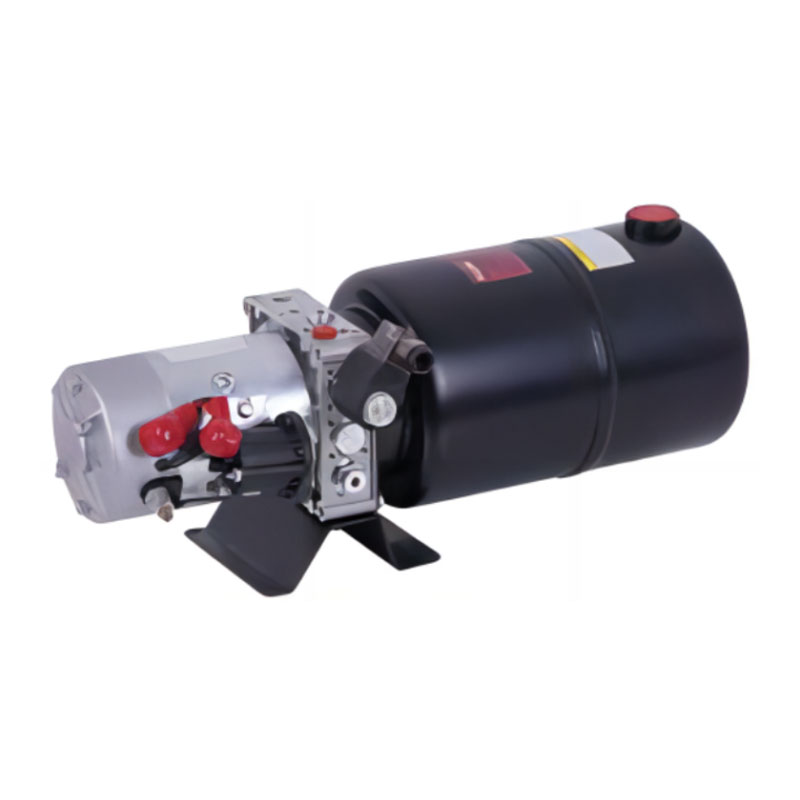
CDU units are low-maintenance compared to central hydraulic stations, but "low-maintenance" is not "zero-maintenance." A systematic service schedule prevents the two most common failure modes: fluid contamination and motor winding overheating.
A contaminated fluid analysis result — ISO 4406 class worse than 18/16/13 — indicates an active contamination source (failing seal, damaged hose, or inadequate breather filtration) that must be traced and fixed before the next service interval. Ignoring a bad particle count report is the single fastest path to gear pump failure inside a CDU unit.
Most field failures in CDU units and DC hydraulic power units trace back to a short list of root causes. Knowing these patterns allows maintenance teams to diagnose problems in minutes rather than hours.
| Symptom | Most Likely Root Cause | Diagnostic Step | Fix |
|---|---|---|---|
| Motor runs but no pressure builds | Relief valve stuck open / pump worn out | Block outlet port — does pressure rise? If yes: relief valve. If no: pump. | Replace relief valve cartridge or pump |
| Slow actuator speed | Pump wear reducing volumetric efficiency | Measure actual flow at rated pressure vs nameplate | Replace pump if flow <80% of rated |
| Motor overheating in <5 minutes | Duty cycle exceeded / low supply voltage | Log motor current and terminal voltage during operation | Reduce cycle frequency; check battery and cable voltage drop |
| Noisy operation (whining or cavitation) | Air ingestion / suction restriction / cold thick oil | Check oil level, inspect suction hose for kinks, measure inlet vacuum | Warm oil before operation; clear suction restriction |
| Solenoid valve not shifting | Contamination lodged in spool / burned coil | Apply voltage directly to coil; measure resistance (should be 6–40 ohms) | Replace coil or clean/replace spool assembly |
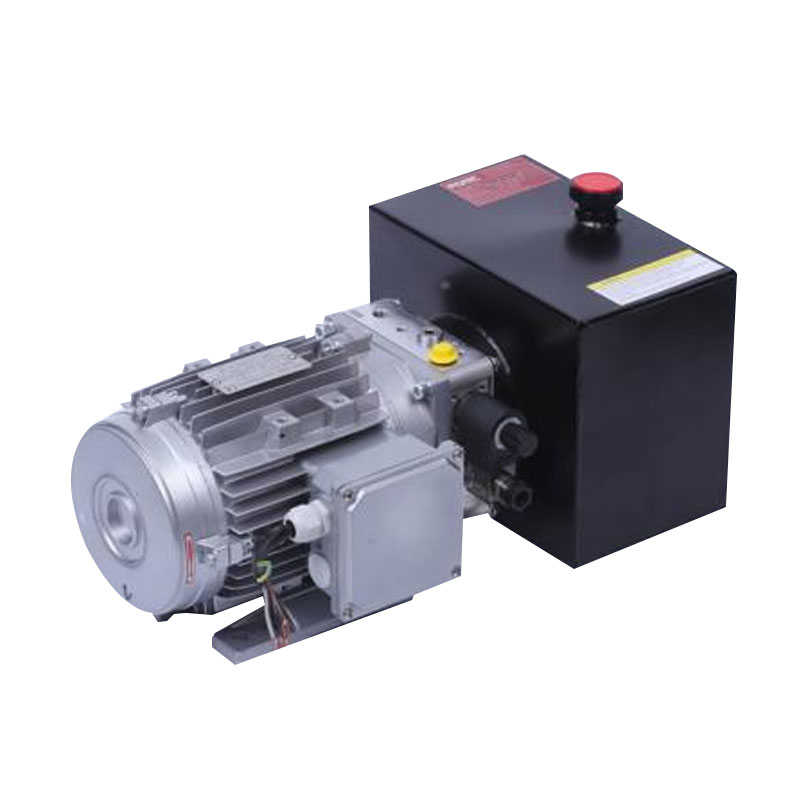
The CDU unit market is undergoing significant change as electrification, connectivity, and energy efficiency mandates reshape machine design across industries.
48 V architecture adoption: Many commercial vehicle platforms are migrating from 24 V to 48 V electrical systems. For DC hydraulic power units, this halves peak current for the same power output — a 3 kW unit at 48 V draws 62 A peak versus 125 A at 24 V. This dramatically simplifies wiring, reduces cable weight, and cuts connector heat dissipation. Expect 48 V DC hydraulic power units to displace 24 V units in medium-duty applications within 5–7 years.
Brushless DC motor integration: Brushless permanent-magnet motors eliminate the most wear-prone component in a DC hydraulic power unit. Units with brushless motors achieve service intervals of 10,000+ hours without motor-specific maintenance. The additional controller cost (electronic commutation circuit) is recouped in reduced downtime within 18–24 months for high-utilization fleets.
CAN bus and IoT connectivity: Smart CDU units now ship with embedded sensors reporting oil temperature, operating cycles, pressure peaks, and motor current draw to fleet telematics systems via CAN-J1939 or Bluetooth 5.0. This enables predictive maintenance scheduling based on actual wear data rather than calendar intervals. Early adopters in the aerial work platform sector report a 23% reduction in unplanned downtime after deploying smart CDU units.
Electro-hydraulic actuator (EHA) convergence: The boundary between a CDU unit and a complete actuator is blurring. Electro-hydraulic actuators integrate the pump, valves, and cylinder into a single sealed unit with no external hydraulic lines at all. These are already standard in aircraft flight control surfaces and are entering industrial automation. The CDU unit as a separate box will coexist with EHA designs but will remain dominant wherever the actuator and the power source must be physically separated by more than 1–2 meters.
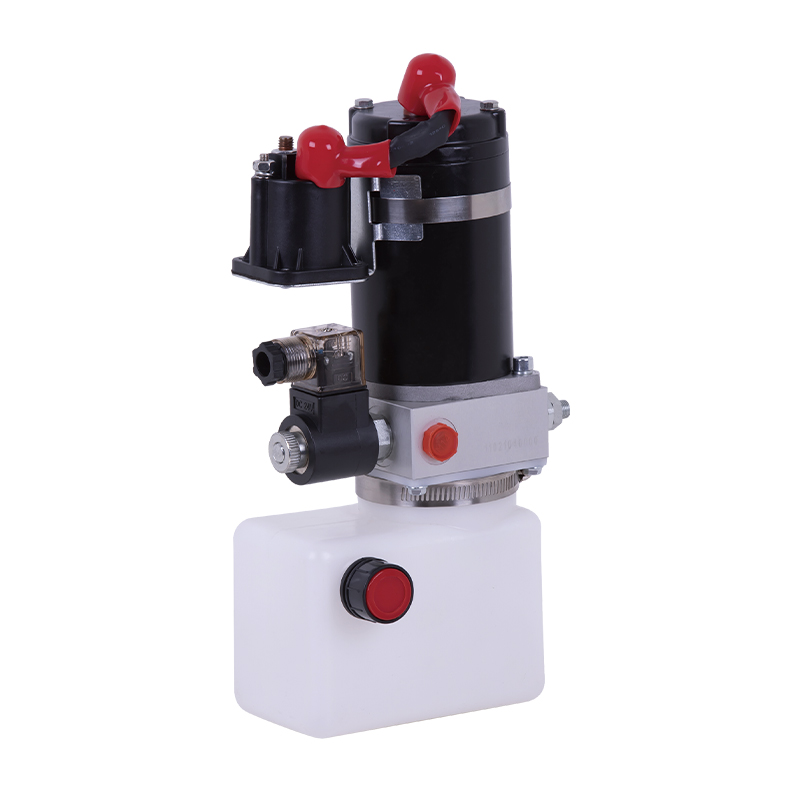
This hydraulic power unit is specially designed for all electric pallet truck.It consists of high voltage gear pump,permanent magnet DC motor and cent...
See Details
This hydraulic power unit is specially designed for the clamping cylinder of the machine, too. It is integrated by a high-pressure gear pump.AC motor,...
See Details
This hydraulic power unit is designed specifically for CNC machine tool cutting cylinders and can provide precise power and control, consisting of a h...
See Details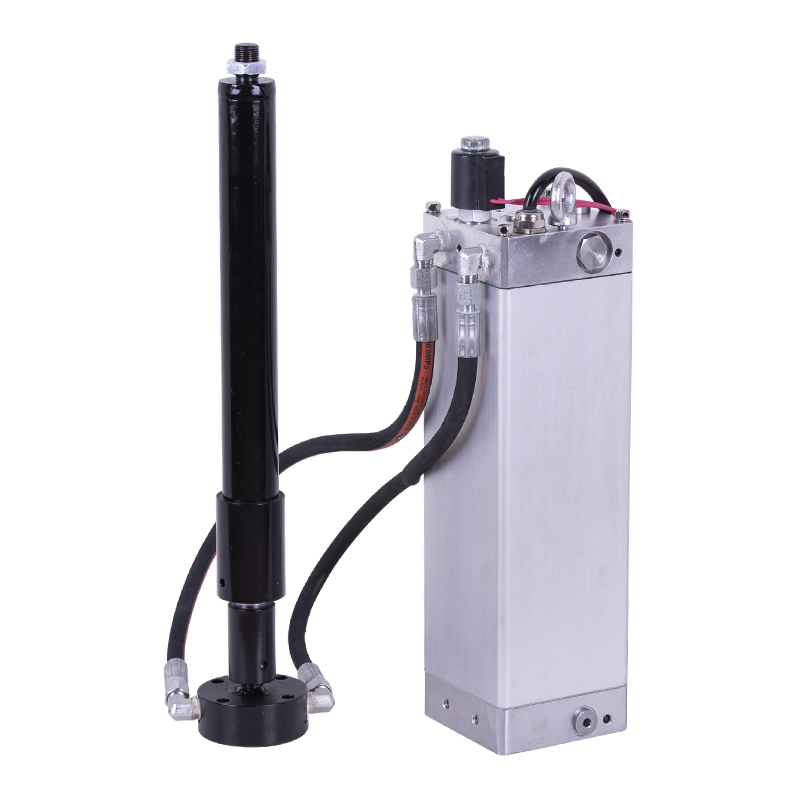
This hydraulic power unit is tailor-made for split shallow buried hydraulic lifting columns. It integrates a bidirectional gear pump, AC oil-immersed ...
See Details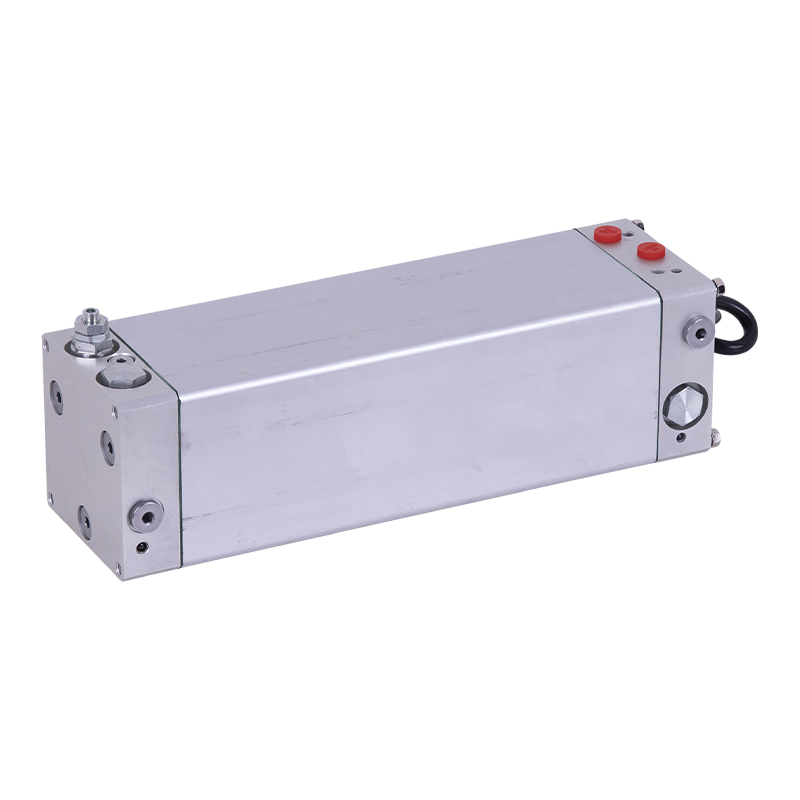
This oil immersed bidirectional pump power unit is designed for various types of mechanical equipment. It integrates a high-pressure bidirectional gea...
See Details
This oil immersed double actina power unit is designed for efficient, compact and low noise applications, integrating high pressure gear pump, AC oil ...
See Details
This hydraulic power unit is specially designed for hydraulic cargo elevators and is integrated with a high-pressure vane pump, AC Oil immersion motor...
See Details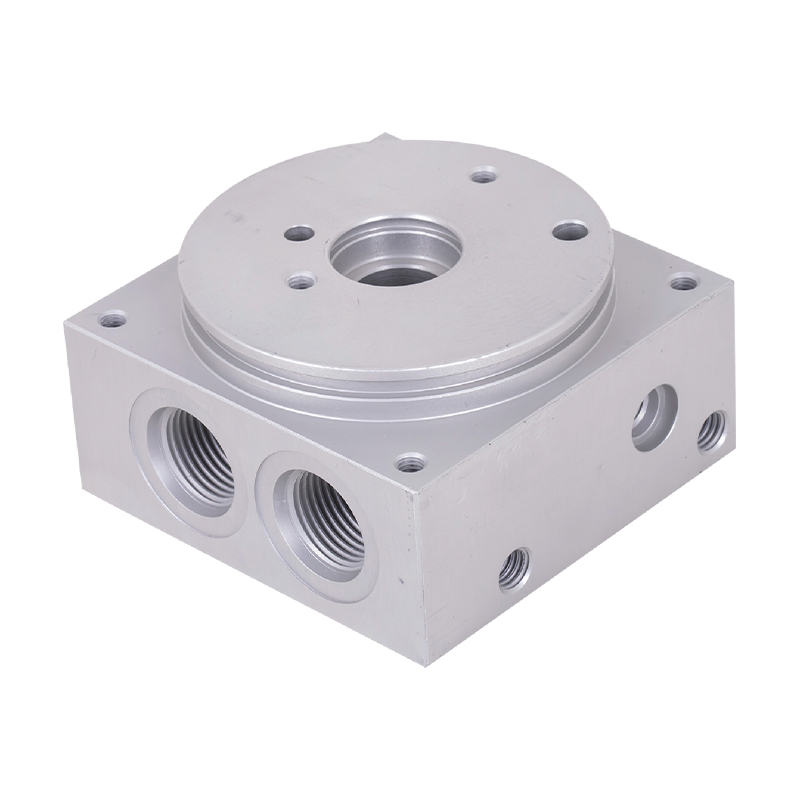
The power unit manifold block for lifting platform is the core integrated component of the hydraulic system, and plays a key role in coordinating vari...
See Details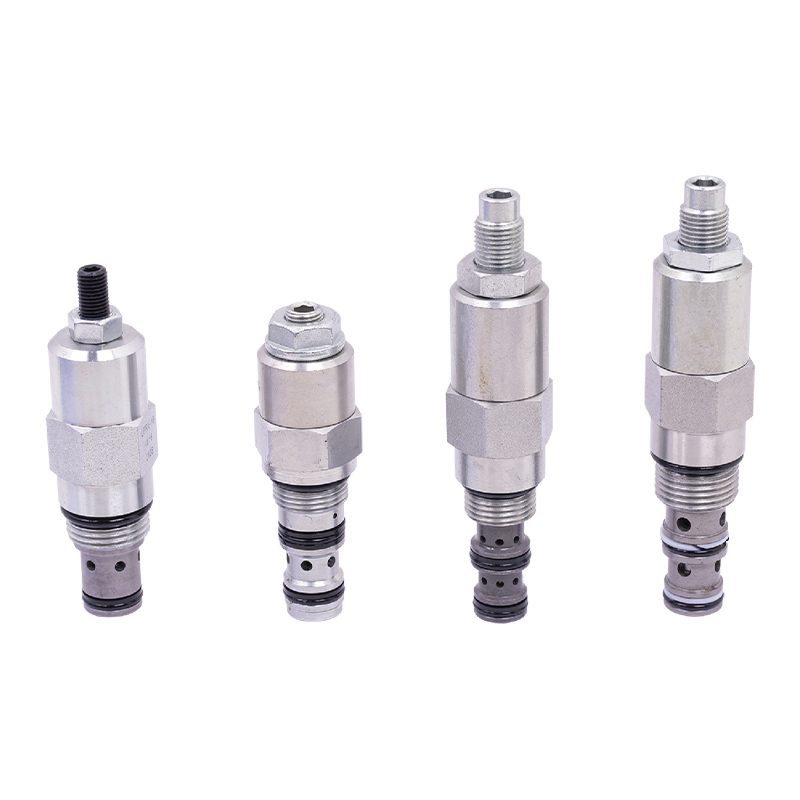
The regulating valve is a key device used in industrial control systems to adjust parameters such as fluid flow, pressure, and temperature. It can acc...
See Details
The hydraulic solenoid valve is a key component in the hydraulic system that controls the opening and closing or reversing of the hydraulic oil passag...
See Details
No. 12 Tongji Road, Simen Town, Yuyao City

+86-0574-62130352
+86-18905846028

+86-0574-62130353

Copyright© Ningbo Panic Hydraulic Technology Co., Ltd. All Rights Reserved. China Hydraulic Power Units Manufacturers

