Liquid Cooling Explained
What CDU Cooling Is and Why It Matters Right Now
CDU cooling — the practice of using a Coolant Distribution Unit to regulate temperature, pressure, and flow of liquid coolant inside a data center — has moved from a niche option to the default architecture for any facility handling AI or high-performance computing workloads. The answer is straightforward: air cooling tops out at roughly 8 kW per rack, while modern AI training racks running next-generation GPU clusters routinely exceed 130 kW per rack, with some liquid-cooled deployments operating above 250 kW per rack (Aulank Pump, 2026). A CDU bridges the gap between the heat generated by IT hardware and the facility water system that ultimately rejects that heat to the outside world.
At its core, a CDU creates an isolated secondary loop — separate from the chilled facility water — and circulates coolant through cold plates mounted directly on CPUs and GPUs. Heat absorbed by the coolant passes through an internal plate heat exchanger back into the facility loop. The CDU also handles dew-point management, filtration, flow balancing, and leak detection. Without a correctly sized and commissioned CDU, a liquid-cooled rack cannot operate safely.
$1.82B Projected CDU market value by 2032 (CAGR 23.5%)
250+ kW Per-rack thermal load in high-density AI clusters (2026)
2.6 MW Maximum capacity of new enterprise-class CDU platforms (DCX, 2026)
How CDU Cooling Works: The Full Hydraulic Loop
Understanding CDU cooling requires understanding that every installation involves at least two distinct fluid circuits. The primary circuit, often called the Facility Water System (FWS), is supplied by the building's chillers or cooling towers. The secondary circuit, called the Technology Cooling System (TCS), is the loop that actually touches the IT equipment. The CDU sits at the interface.
The Primary and Secondary Loop Relationship
The two loops are hydraulically isolated by a plate-type heat exchanger inside the CDU. This isolation is non-negotiable: facility water often contains treatment chemicals, particulates, or pressure variations that would damage cold plates or chip interfaces. The CDU's internal plate heat exchanger allows heat to transfer from the TCS side to the FWS side without any fluid mixing. According to ASHRAE guidelines cited in multiple CDU manufacturer whitepapers, the TCS supply temperature must be maintained above the dew point of the data center to prevent condensation on electronics — typically 17–22°C depending on ambient conditions.
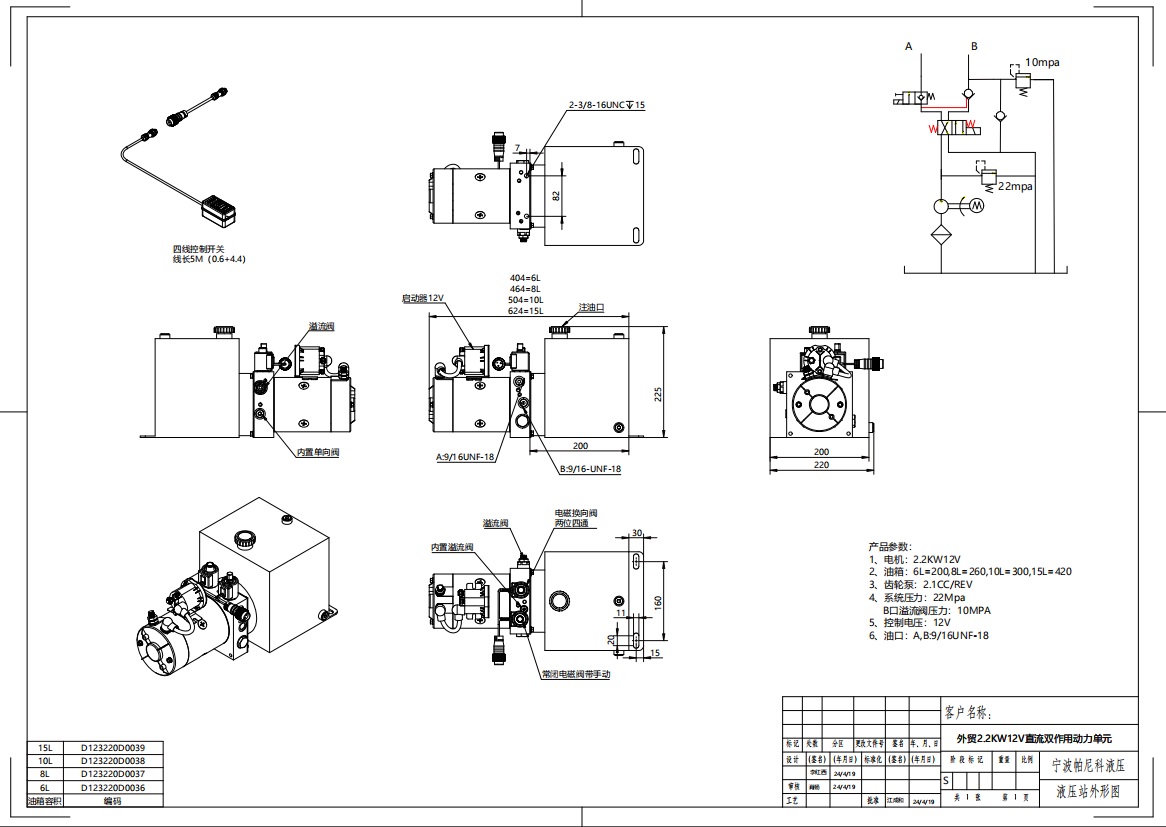
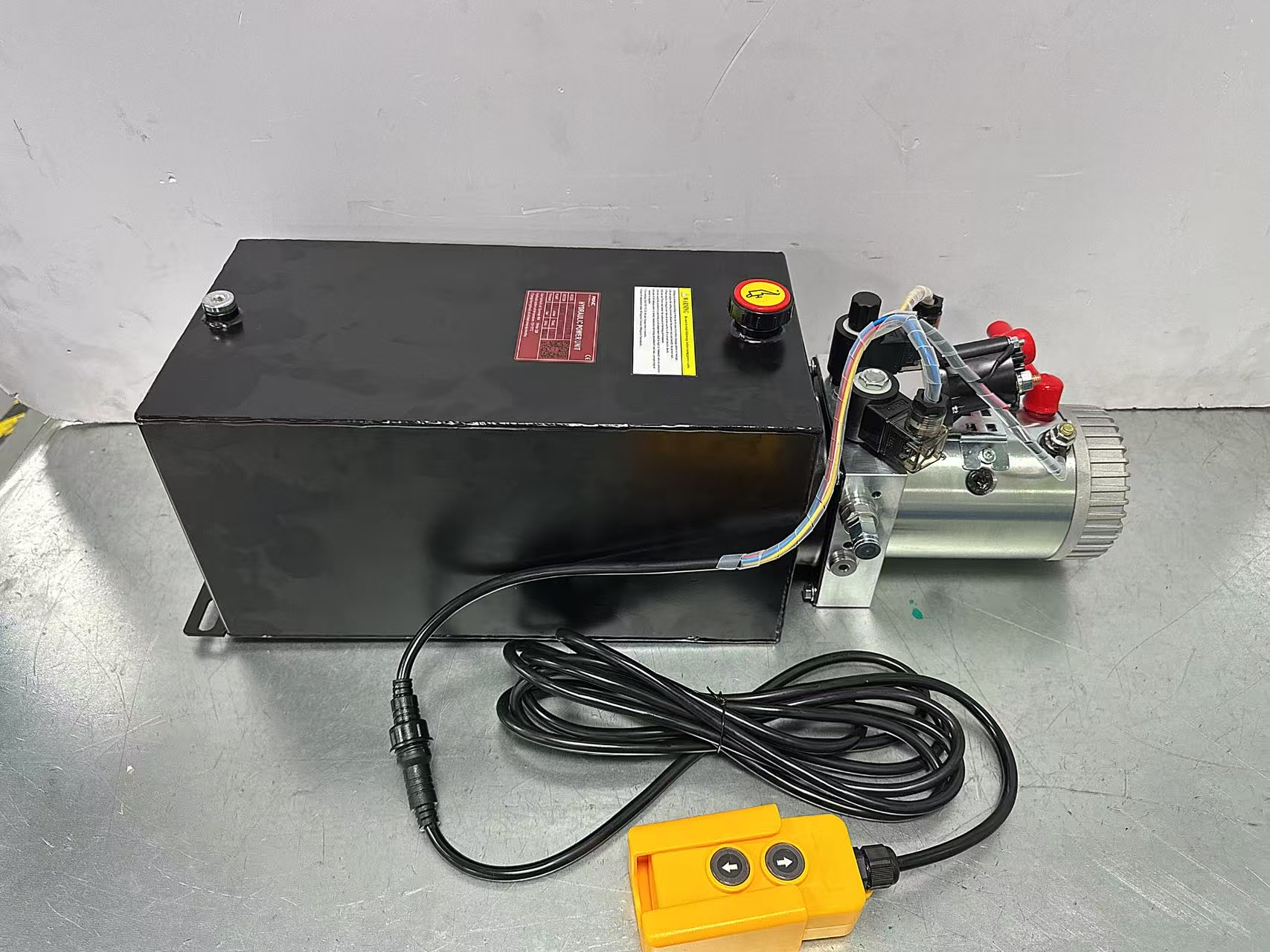
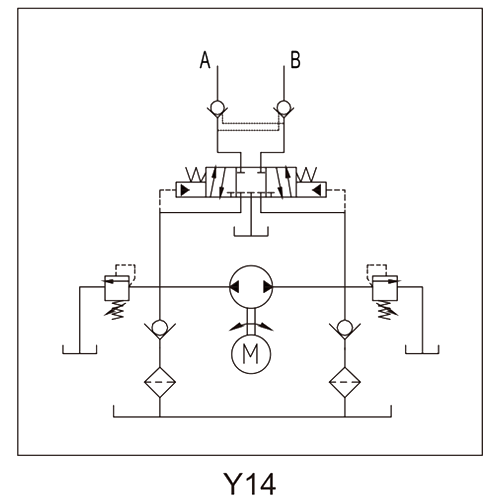
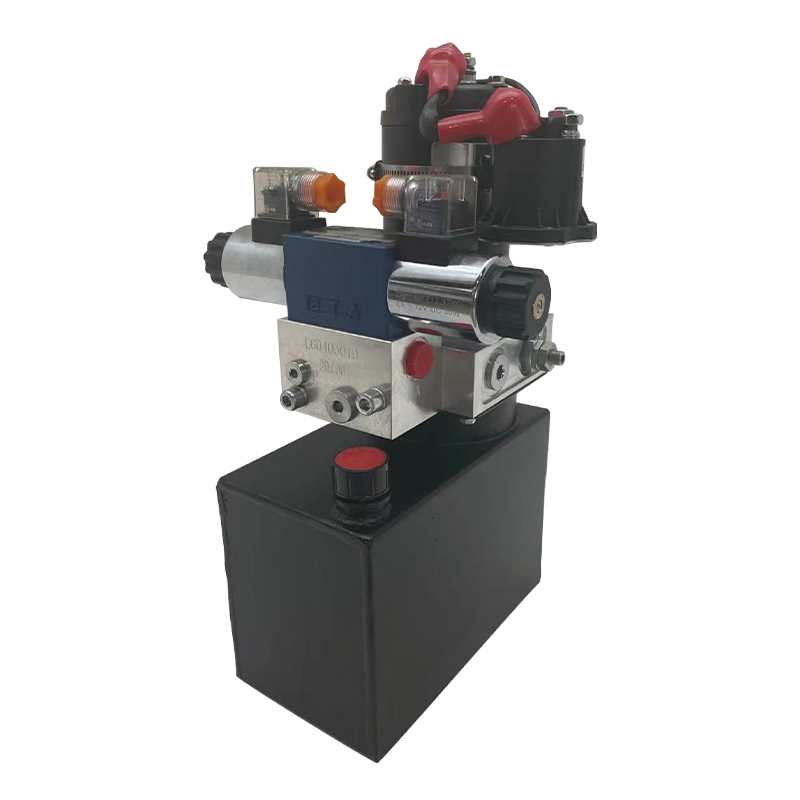
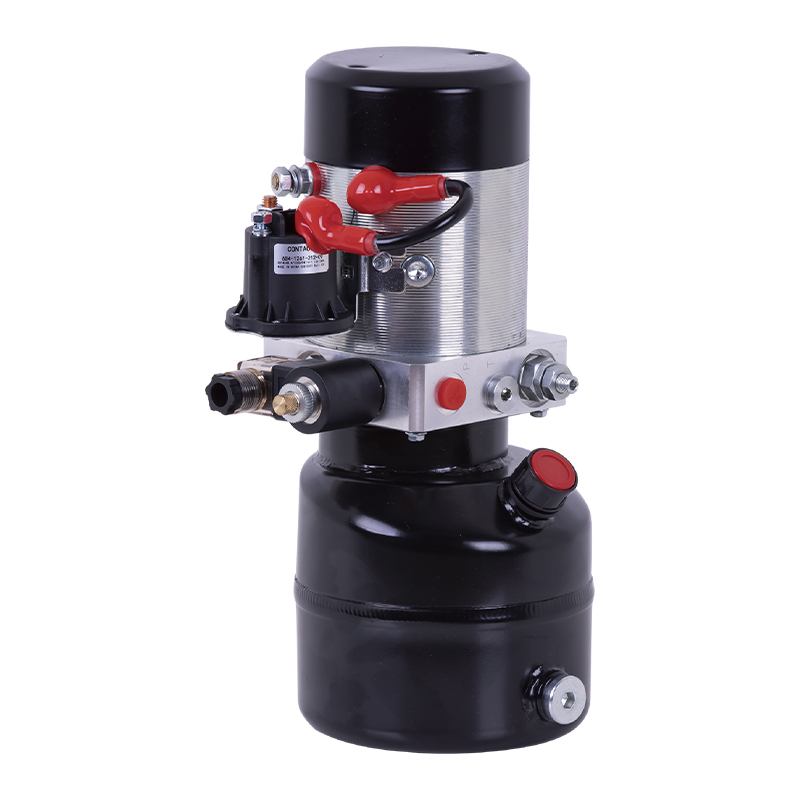
The pumping force that drives coolant through the secondary loop comes from what engineers commonly call a DC hydraulic power unit — a compact assembly combining a brushless DC motor, an impeller or vortex-type pump, and a variable-frequency drive (VFD) controller. In modern in-rack CDU designs, space is measured in rack units (U), and Panasonic's published engineering notes describe fitting three pump assemblies within a 4U (178 mm) internal space, while still delivering 70 liters per minute of flow — a 75% improvement over earlier 40 L/min designs achieved through magnetic field analysis and fluid dynamics optimization (Panasonic, 2025).
The DC hydraulic power unit approach dominates over AC-motor designs in 2025–2026 for three reasons. First, brushless DC motors eliminate the commutator wear that shortens service life in high-humidity data center environments. Second, variable-speed control — available via PWM or 0–10V analog signals — lets the CDU controller modulate flow precisely in response to changing chip temperatures without running pumps at full power during low-load periods. Third, 12V DC and 48V DC bus compatibility means the pump assembly can draw directly from the server rack's power distribution without needing a separate AC step-down transformer (Moog CoreMotion, 2025).
Magnetic-drive designs (sealless construction) are increasingly mandatory in direct-to-chip secondary loops because any fluid leak adjacent to live electronics is a hardware-loss event rather than a housekeeping issue. Aulank Pump's 2026 selection guide documents that mechanical-seal centrifugal designs are "increasingly absent from new CDU designs" given unacceptable seal failure rates on 4–6 bar pressurized secondary loops.
Filtration, Sensors, and Intelligent Control
Beyond the pump and heat exchanger, a CDU integrates several subsystems. Filtration cartridges rated between 0.2 and 50 microns remove particulates that would otherwise score cold-plate microchannels or block manifold orifices. Pressure, temperature, and differential-pressure sensors on both sides of the heat exchanger feed a PLC or embedded controller. This controller runs the closed-loop algorithms that set pump speed, modulate control valves, and fire alarms if a dew-point excursion or leak is detected. Enterprise platforms like the DCX ECDU line support OPC UA, MQTT, BACnet IP, and SNMP interfaces, allowing the CDU to integrate directly with building management systems (BMS) or data center infrastructure management (DCIM) platforms (DCX, 2026).
Types of CDU Cooling Configurations
CDU cooling is not a single product; it spans a wide range of form factors tailored to rack density, available floor space, and the existing facility water infrastructure. The three dominant configurations in 2025–2026 are in-rack CDUs, in-row CDUs, and centralized CDU skids.
■
In-Rack CDU
Installed directly inside the server rack, typically in a 4U to 8U chassis at the bottom or rear. Ideal for localized cooling of a single rack. Panasonic's pump assemblies are a leading component choice for this format. Capacity is typically 30–200 kW per unit. Best suited for colocation tenants who cannot modify shared facility infrastructure.
■
In-Row CDU
Positioned at the end of or between rack rows, serving multiple racks through a manifold distribution network. This is the format used by most enterprise CDU platforms including the Eaton ROL2300 (up to 2.3 MW) and the DCX ECDU series (600 kW to 2.6 MW). Redundant pump groups (N+1 or 2N) are standard. Suited for hyperscale and large enterprise data halls.
■
Centralized CDU Skid
A large, pre-assembled hydraulic skid installed in a mechanical room or technical corridor, serving an entire data hall or cooling zone. Supreme Integrated Technology's centralized skids, for example, use dual 125 HP pump-motor groups with Danfoss VFDs and purpose-built heat exchangers. Capacity can reach 5–8 MW when paired with facility-level Facility Distribution Units (FDUs). Optimal for hyperscale greenfield builds.
Comparison of CDU cooling configuration types by key deployment parameters
| Configuration |
Typical Capacity |
Best Application |
Pump Type Common |
Redundancy Model |
| In-Rack CDU |
30–200 kW |
Single-rack, colocation |
Brushless DC, magnetic-drive |
N+1 pump sets |
| In-Row CDU |
200 kW – 2.6 MW |
Multi-rack, enterprise, HPC |
Centrifugal / VFD-controlled |
2×50% or N+1 |
| Centralized Skid |
2.5 MW – 8 MW+ |
Hyperscale, entire data halls |
High-HP centrifugal, Danfoss VFD |
2N or dual primary paths |
DC Hydraulic Power Unit Selection for CDU Cooling Systems
Selecting the right DC hydraulic power unit for a CDU cooling application involves balancing five interrelated parameters: flow rate, head pressure, motor efficiency, noise limits, and coolant compatibility. Getting any one of these wrong can compromise system uptime or accelerate component wear.
01
Flow Rate Requirements
Flow rate in CDU secondary loops is determined by the thermal load and the permitted temperature rise across the cold plates. A common design point is a 10–12 K temperature differential (deltaT) on the secondary side. For a 200 kW rack at 10 K deltaT using water (specific heat ~4.18 kJ/kg·K), the required flow is approximately 4.8 L/s or 288 L/min. In-rack DC hydraulic power unit assemblies from Panasonic reach 70 L/min per pump; three units in parallel give 210 L/min for a single rack — adequate for racks up to about 150 kW at a 10 K deltaT.
02
Head Pressure and Microchannel Cold Plates
Modern microchannel GPU cold plates introduce significant pressure drops — often 0.5–1.5 bar per cold plate — and a full rack manifold distributing flow to 8–16 cold plates can demand 3–5 bar of available head from the DC hydraulic power unit. Vortex (regenerative turbine) pump hydraulics inherently deliver high head at moderate flow, which is why they have become the mainstream choice for CDU secondary-loop applications. Pulsation levels must remain below 2% peak-to-peak to avoid flow-induced vibration on cold plate copper structures.
03
Motor Efficiency and Variable Speed Control
A high-efficiency brushless DC motor driving a magnetic-coupled impeller can reach motor efficiencies of 85–92% across the operating speed range. VFD integration reduces pump energy draw by 30–50% during partial-load periods compared to fixed-speed operation. Moog's CoreMotion platform supports 12V DC, 48V DC, and 230/240V AC operation from the same physical pump body — an advantage in facilities transitioning to 48V rack power distribution, which is becoming standard in hyperscale environments.
04
Noise and Vibration
In-row and in-rack CDUs are installed in data halls where acoustic emissions affect technician working conditions. Magnetic-drive DC hydraulic power units with sealless construction are significantly quieter than gear-pump or vane-pump alternatives because there is no metal-on-metal contact in the fluid path. Several CDU manufacturers (including TOPSFLO) cite noise levels below 45 dB(A) at rated flow — enabling deployment in mixed-use or office-adjacent environments where CRAC-based air cooling units would be unacceptable.
05
Coolant Compatibility
Most CDU secondary loops run deionised water or a propylene glycol–water mixture (typically PG25 — 25% propylene glycol by volume) for freeze protection. Wetted parts must be 316L stainless steel or EPDM/PTFE-sealed to resist corrosion. Some immersion cooling secondaries use synthetic hydrocarbons or fluorinated fluids with viscosities in the 5–15 cP range at operating temperature; these require pump hydraulics designed for lower-density, lower-surface-tension fluids, and the DC hydraulic power unit's motor enclosure rating must match the fluid's flammability category if applicable.
CDU Cooling Market Growth and Industry Data
The numbers behind CDU cooling adoption reflect a structural shift in how data centers are built and powered. According to Intel Market Research (2025), the global high-power CDU market was valued at USD 414 million in 2024 and is projected to reach USD 1.824 billion by 2032, representing a compound annual growth rate of 23.5%. The hyperscale segment captured 77% of market share in 2025, confirming that the largest cloud providers are the primary force behind CDU demand.
Rack Density Driving Adoption
The link between rack power density and CDU necessity is direct. Data from the Association for Computer Operations Management (AFCOM) State of the Data Center Report 2024 shows that average rack density climbed from 6.1 kW per rack in 2017 to 12.0 kW per rack in 2024. Omdia's 2024 report projects average densities reaching 20 kW per rack by 2030. However, AI training clusters are already well beyond that curve: Aulank Pump's 2026 industry guide documents racks exceeding 130 kW for NVIDIA Blackwell GB200/GB300 deployments, and some configurations surpass 250 kW per rack. At these levels, air cooling is not merely inefficient — it is physically insufficient.
The 55% of data center professionals who anticipate continued density growth (Uptime Institute 2024 survey, 721 respondents) are not speculating; they are documenting a trend that is already visible in chip roadmaps. NVIDIA's next-generation accelerators have published TDP figures exceeding 700W per chip, and full 8-GPU trays run above 6 kW in a chassis that occupies 6U of rack space — more than 1 kW per rack unit before storage, networking, or redundant power supply losses are added.
Source: AFCOM State of the Data Center 2024; Aulank Pump 2026 CDU Selection Guide
CDU Cooling Efficiency: PUE Impact and Free Cooling Hours
One of the most compelling reasons to deploy CDU cooling alongside a well-chosen DC hydraulic power unit is the measurable improvement in Power Usage Effectiveness (PUE). PUE is the ratio of total facility power to IT equipment power; a PUE of 1.0 is perfect, while a typical air-cooled facility runs 1.4–1.8. Liquid-cooled facilities with optimized CDU installations regularly achieve PUE values of 1.1–1.2, according to published data from major CDU vendors including Vertiv and nVent.
Warm-Water Cooling and Extended Free Cooling
The AT3-class plate heat exchangers used in leading CDU platforms (including DCX's ECDU series) enable significantly tighter approach temperatures than conventional designs, allowing the facility supply water to be as warm as 45°C while still removing heat from secondary loops running at 35–40°C. This is important because it extends the number of hours per year during which a dry cooler or cooling tower can reject heat without running a chiller — so-called free cooling hours. In a temperate climate, a 45°C-rated CDU system can operate chiller-free for 6,000–8,000 hours per year, compared to roughly 2,000 hours for a conventional chilled-water system requiring 7°C supply water (DCX ECDU documentation, 2026).
Heat Recovery Integration
Some CDU cooling platforms go a step further by integrating a third heat exchanger or heat pump to raise the temperature of recovered heat for use in district heating or building HVAC systems. WKM-Michel's CDU documentation describes systems capable of producing outlet temperatures suitable for low-temperature heating networks, with optional heat pump technology to boost the temperature level further. This transforms the data center from a pure heat source into a partial energy provider — a trajectory aligned with EU sustainability directives requiring data centers above certain power thresholds to report and progressively reduce waste heat discharge.
Side-Stream Filtration and Fluid Longevity
A secondary efficiency factor that is often underweighted during CDU selection is coolant cleanliness. Particulates above 10 microns can score microchannel cold plate surfaces, increasing thermal resistance over time. CDU platforms with continuous side-stream injection filtration — as used in Supreme Integrated Technology's centralized skid designs — keep particulate counts low without requiring system shutdown for filter changes. The resulting reduction in thermal resistance degradation extends the interval between cold-plate replacements and maintains designed heat-transfer coefficients through the server lifecycle.
CDU Cooling Installation and Commissioning Considerations
Even a well-specified CDU system will underperform if installation and commissioning do not follow the correct sequence. The most common errors seen in field deployments involve air entrainment in the secondary loop, incorrect dew-point set points, and inadequate commissioning of the DC hydraulic power unit's VFD parameters.
Flushing and Air Purging
The secondary loop must be flushed with the specified coolant (typically deionised water at a measured resistivity above 0.5 MΩ·cm) before any cold plates are connected. Air pockets in cold plate microchannels create hot spots and can cause local boiling even when bulk coolant is well below saturation temperature. Automatic air-bleed points should be installed at all high points in the manifold, and the CDU's vent port must be cycled during filling. Pre-piped CDU platforms like the DCX ECDU Entry model include built-in supply/return headers with integrated air-bleed points that can cut on-site piping labor by up to 60% versus component-by-component builds.
Dew-Point Set Point Commissioning
The CDU controller's dew-point management algorithm takes temperature and relative humidity readings from sensors inside the data hall and calculates the coolant supply temperature floor. If the data hall runs at 24°C and 45% relative humidity, the dew point is approximately 11.5°C, and the CDU should maintain secondary supply above at least 13°C with a suitable safety margin. Errors in sensor placement — for example, positioning the humidity sensor near a perforated tile airflow rather than in the return air stream — lead to persistent alarms or, worse, undetected condensation events.
DC Hydraulic Power Unit VFD Tuning
The variable-frequency drive controlling the CDU's DC hydraulic power unit must be tuned to the actual hydraulic curve of the installed secondary loop. Over-speed settings cause excessive pressure at cold plate inlets, risking seal extrusion or connector damage. Under-speed settings reduce flow and allow chip temperatures to rise during peak workloads. Most CDU commissioning protocols involve recording pump speed, differential pressure, and inlet/outlet temperatures at multiple operating points and verifying that the calculated heat transfer matches the server thermal design point within ±5%.
Redundancy Testing
Before declaring a CDU cooling system operational, each redundant pump set must be exercised in isolation. For N+1 configurations, the primary pump is shut off while verifying that the standby unit starts within the auto-changeover time (typically under 3 seconds) and that cold-plate supply temperature does not exceed the trip setpoint during transition. For 2N configurations, both trains are run simultaneously to verify balanced flow distribution through the manifold, then each train is isolated in turn.
CDU Cooling vs. Alternative Liquid Cooling Approaches
CDU-based direct-to-chip cooling is the most widely deployed form of liquid cooling in data centers, but it exists alongside rear-door heat exchangers (RDHx), single-phase immersion, and two-phase immersion. Each has a different role, and the DC hydraulic power unit requirements differ significantly across approaches.
Liquid cooling technology comparison for data center applications (2025–2026)
| Technology |
Heat Capture Rate |
Server Modification Required |
DC Hydraulic Unit Role |
Max Rack Power Supported |
| CDU Direct-to-Chip |
60–80% of rack heat |
Cold plates on CPU/GPU required |
Primary secondary-loop driver |
250+ kW |
| Rear-Door Heat Exchanger (RDHx) |
40–60% of rack heat |
No server modification |
Facility water circulation |
~60 kW (air-side limitation) |
| Single-Phase Immersion |
Up to 98% of rack heat |
Bare boards in dielectric tank |
Dielectric circulation pump |
300+ kW |
| Two-Phase Immersion |
Up to 98% of rack heat |
Bare boards in boiling fluid |
Low-duty makeup/condensate pump |
500+ kW |
The reason CDU direct-to-chip cooling dominates current deployments despite capturing only 60–80% of rack heat (residual heat leaving via convection from non-liquid-cooled components such as DIMMs, storage, and power supplies is handled by supplemental air) is the combination of server compatibility and operational familiarity. Unlike immersion systems, CDU-cooled racks retain standard server chassis, standard maintenance procedures, and standard warranty coverage from server OEMs — a significant factor for enterprise buyers with large installed bases.
Maintaining CDU Cooling Systems and DC Hydraulic Power Units
A well-designed CDU cooling system running a properly sized DC hydraulic power unit can operate for years with minimal intervention, but a structured preventive maintenance program is essential for avoiding unplanned downtime.
- Coolant resistivity checks (monthly): Deionised water slowly picks up ionic contamination from pipe walls and cold plate materials. Resistivity dropping below 0.1 MΩ·cm signals that the mixed-bed resin cartridge needs replacement. Running low-resistivity coolant accelerates galvanic corrosion in aluminum cold plate channels.
- Filter cartridge inspection (quarterly): Side-stream filters rated 0.2–10 microns accumulate particulate at a rate proportional to loop velocity and pipe surface area. Most CDU platforms include a differential pressure indicator across the filter housing; a rise above the manufacturer's threshold (typically 0.3–0.5 bar) triggers a change recommendation. Platforms with dual filter housings allow a change without interrupting secondary loop flow.
- Pump bearing vibration analysis (semi-annual): Even sealless magnetic-drive DC hydraulic power units have bearings in the impeller shaft that wear over time. Vibration analysis using an accelerometer placed on the pump casing can detect developing bearing wear 3–6 months before failure — enough lead time to schedule a planned replacement without an emergency shutdown. DCX's ECDU control platform logs motor current and vibration trends continuously and surfaces predictive-maintenance alerts via its BMS interface.
- Heat exchanger fouling assessment (annual): The primary-side (facility water) surface of the plate heat exchanger is the most likely location for fouling deposits, particularly in regions where facility water has elevated hardness or biological content. Annual thermal performance testing — comparing the actual heat transfer rate at measured flow and temperature conditions against the design curve — detects fouling before it degrades secondary loop supply temperatures.
- Cold plate visual inspection (on server refresh): When servers are replaced or upgraded, the cold plates should be visually inspected for corrosion pitting, scoring, or o-ring extrusion at the quick-disconnect fittings. Eaton's CDU documentation notes that blind-mate quick disconnects with 360-degree swivel fittings minimize the force applied during connection and disconnection, reducing o-ring damage — but inspection remains necessary.
The Future of CDU Cooling: Trends Shaping the Next Generation
Several converging technology trends will shape how CDU cooling systems and their DC hydraulic power units evolve through the late 2020s. Understanding these directions helps data center planners make purchasing decisions that will remain compatible with future infrastructure generations.
48V DC Power Architecture
As hyperscale facilities adopt 48V DC rack distribution to reduce copper losses, CDU pump assemblies are being redesigned to run natively at 48V. This eliminates the AC power supply unit from the CDU's electrical architecture, reducing conversion losses and simplifying maintenance. Moog's CoreMotion documentation already lists 48V DC as a supported operating voltage.
AI-Driven Flow Control
Next-generation CDU control platforms are integrating machine learning algorithms that predict cooling demand based on workload type — distinguishing, for example, between matrix-multiply-intensive AI training (sustained peak power) and inference serving (highly variable, burst-heavy load). Predictive flow adjustment reduces pump energy by 20–40% compared to reactive proportional-integral control loops, according to early field data from hyperscale deployments.
Standardized Quick-Connect Infrastructure
The Open Compute Project (OCP) and equivalent industry consortia are driving standardization of CDU manifold connection points, enabling multi-vendor cold plates to connect to a single CDU without custom fittings. The Eaton ROL4000, inspired by OCP Project Deschutes fifth-generation specifications, demonstrates how standard connect profiles can serve 2 MW cooling loads at a 3°C approach temperature — achievable only with AT3-class heat exchangers and precisely controlled DC hydraulic power unit output.
Integrated Heat Recovery as Standard
Regulatory pressure, particularly in Europe, is accelerating the integration of heat recovery provisions into base CDU specifications. WKM-Michel's current CDU lineup includes a factory-option heat exchanger port for waste heat extraction, with a control strategy that guarantees cooling performance takes absolute hydraulic priority over heat recovery throughput. The ability to feed local heating networks from data center reject heat is moving from a premium option toward a standard feature in 2025–2026 platform releases.
Frequently Asked Questions About CDU Cooling
What is the difference between a CDU and a CRAC unit?
A Computer Room Air Conditioning (CRAC) unit uses refrigerant or chilled water to cool recirculated air within the data hall. A CDU is a liquid-to-liquid heat exchanger system that distributes coolant directly to IT hardware through cold plates or manifolds. CDUs are far more thermally efficient for high-density applications but require server-side cold plate compatibility. CRAC units work with standard unmodified servers and remain relevant as supplemental cooling for CDU installations that capture 60–80% of rack heat in liquid form, leaving some residual heat for air removal.
How does a DC hydraulic power unit differ from a standard AC pump in CDU applications?
A DC hydraulic power unit uses a brushless DC motor with electronic commutation, delivering variable speed control, higher efficiency at partial load, lower acoustic emissions, and compatibility with DC power distribution buses (12V or 48V). A standard AC pump runs at fixed speed (or with a separate external VFD), requires AC power supply, and has higher no-load losses. For in-rack CDU applications where space and power are tightly constrained and variable workloads demand adaptive flow, DC hydraulic power units are now the default choice among leading manufacturers including Panasonic, Moog, and TOPSFLO.
What coolant should be used in a CDU secondary loop?
The most common choice is deionised water with resistivity maintained above 0.5 MΩ·cm. For facilities where ambient temperatures can fall below 10°C (outdoor cooling, edge locations), a propylene glycol–water mixture at 25–30% glycol by volume (PG25 or PG30) is used for freeze protection. Propylene glycol reduces specific heat capacity slightly and increases viscosity, both of which increase the pumping energy required for a given thermal load — a factor that must be accounted for in DC hydraulic power unit sizing. Inhibitor packages specifically formulated for aluminum and copper cold plate compatibility should be used, and system pH should be maintained between 7.0 and 8.5.
Can CDU cooling be retrofitted into an existing air-cooled data center?
Yes, but the practical complexity depends on whether facility water is already available in the white space. If chilled water risers terminate in the mechanical room but not on the data hall floor, in-row CDUs connected via flexible hose assemblies offer the least disruptive path. The CRAC units can remain operational for residual heat removal while CDU coverage is expanded rack by rack. Compact in-row CDU platforms are specifically designed with this brownfield use case in mind — the DCX HYDRO CDU 12, for instance, is described as fitting "any data room environment with in-row or technical corridor placement." Piping labor is the dominant cost variable; pre-piped CDU platforms that include supply/return headers and air-bleed points can reduce installation time significantly.
What redundancy level is appropriate for CDU cooling systems?
The appropriate redundancy level mirrors the broader data center tier requirements. Tier III equivalent deployments (99.982% uptime) typically use N+1 pump redundancy within each CDU, combined with manifold isolation valves that allow a CDU to be taken offline without interrupting flow to adjacent racks. Tier IV equivalent deployments use 2N architecture — two independent CDU trains each sized to handle 100% of the rack thermal load, with automatic switchover on pump failure or maintenance. For hyperscale AI training environments where even brief thermal throttling degrades job completion time across thousands of GPUs, 2N architecture is standard despite the additional capital cost.
How does CDU cooling affect PUE compared to air cooling?
A well-commissioned CDU cooling system operating with warm-water-compatible heat exchangers and an optimally tuned DC hydraulic power unit typically reduces facility PUE from the 1.4–1.8 range typical of air-cooled legacy facilities to 1.1–1.2. The improvement comes from three sources: elimination of energy-intensive computer room air handlers, extension of free cooling hours (chiller-off operation) enabled by higher allowable supply water temperatures, and reduction of IT equipment fan power since liquid-cooled CPUs and GPUs no longer require the same airflow for heat rejection. Some hyperscale operators report PUE values approaching 1.05 for new liquid-cooled facilities in temperate climates.
What is the typical lifespan of a CDU cooling system?
Plate heat exchangers and manifold pipework in CDU systems are designed for 15–20 years of service life under normal operating conditions, assuming coolant chemistry is maintained and system pressure remains within design limits. The components most likely to require earlier replacement are pump assemblies (typically 5–8 year bearing life for magnetic-drive DC hydraulic power units, extendable with predictive maintenance) and elastomeric seals at quick-disconnect fittings (2–5 years depending on connection frequency). Control electronics and sensor modules are typically warrantied for 3–5 years and may require replacement on a 7–10 year cycle as firmware support ends for older platform generations.
What flow rate does a CDU need for a 100 kW AI server rack?
For a 100 kW rack with a 10 K temperature differential on the secondary side using water as coolant, the required mass flow is approximately 2.4 kg/s or 144 L/min. Adding a 15% safety margin for flow distribution losses in the manifold brings the DC hydraulic power unit specification to approximately 165 L/min at the CDU outlet. At a design head of 3 bar (accounting for cold plate and manifold pressure drops), this corresponds to a pump hydraulic power requirement of roughly 820 W. With a DC hydraulic power unit efficiency of 65–75%, the electrical input to the pump assembly is approximately 1.1–1.3 kW — less than 1.3% of the rack's IT load, confirming that liquid cooling's pumping overhead is negligible compared to its thermal benefit.



 English
 中文简体
中文简体 русский